Five Lactoflor products related to the gastrointestinal tract and three different principles of action: synbiotics with live bacteria and a prebiotic, a pure prebiotic without bacteria, and a formula with non-viable cells. The choice depends on whether you are looking for daily microflora care, a short targeted course, or support for peristalsis.
Probiotic, prebiotic, synbiotic: the difference in practice
A probiotic introduces live microorganisms. A prebiotic contains no bacteria, but rather a substance that is not digested in the small intestine and serves as food for the already existing microflora, most commonly inulin or another type of soluble fiber. A synbiotic combines both in one package.
The difference has practical significance when making a choice. A prebiotic only has something to feed if the microflora is present and diverse. If you are coming off a course of antibiotics, the priority is different. If your diet is low in plant fiber, a prebiotic does work that a probiotic cannot do on its own.
A separate case is Pylopass in HelicoProtect. It represents a selection of non-viable cells of the strain Lactobacillus reuteri DSM 17648. Since the definition of a probiotic requires live microorganisms, the product is not a probiotic in the strict sense, even though it is based on a probiotic strain.
How to choose a digestion product
- Daily microflora care.A synbiotic with a broad strain profile and a prebiotic in its composition, for a course of 2 to 4 weeks.
- A short and targeted period.A formula with a more specific composition and a small package, covering exactly the course.
- Peristalsis and food volume.Prebiotic fibers work by a different mechanism and can be combined with a probiotic.
- Method of administration.A capsule that must be separated from medications by two hours, or a sachet that is dissolved during a meal.
- Age.Fibers are suitable from 3 years of age, Opti6 and Enteric Ecol from 6, HelicoProtect from 9 years of age.
Products in this category
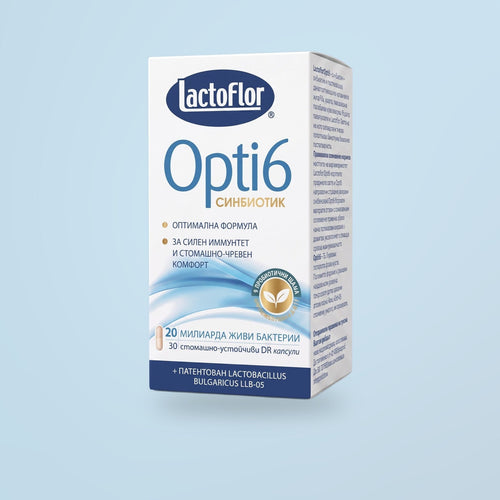
Lactoflor Opti6
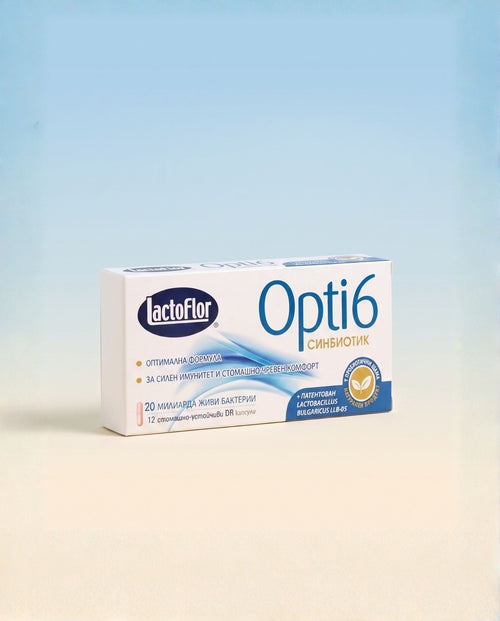
A new-generation synbiotic with 9 strains of lactic acid bacteria and bifidobacteria and the prebiotic inulin from chicory root. 20 billion lyophilized bacteria per capsule, in an acid-resistant DRcaps capsule with delayed release. Available in a 30-count packagefor a full course and a 12-capsule packagefor short-term intake.
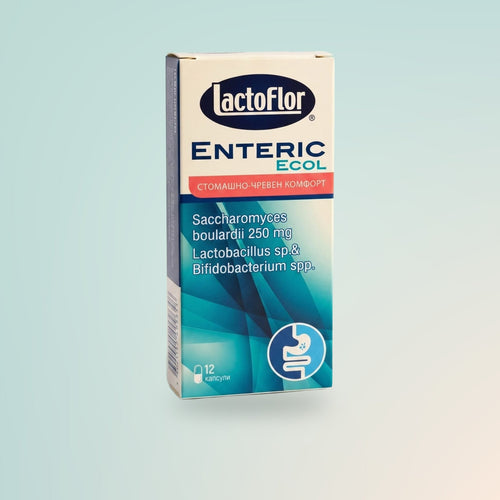
Lactoflor Enteric Ecol
Combines five probiotic strains from the genera Lactobacillus and Bifidobacterium with Saccharomyces boulardii, a yeast with over 140 published studies. The formula also includes natural antimicrobial agents. A 12-capsule package, with a regimen for children under 6 years, where the contents are poured into a little water or juice. See Enteric Ecol.
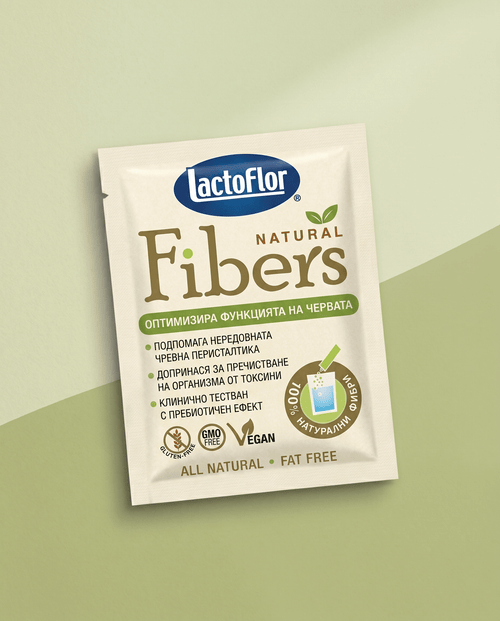
Lactoflor Fibers
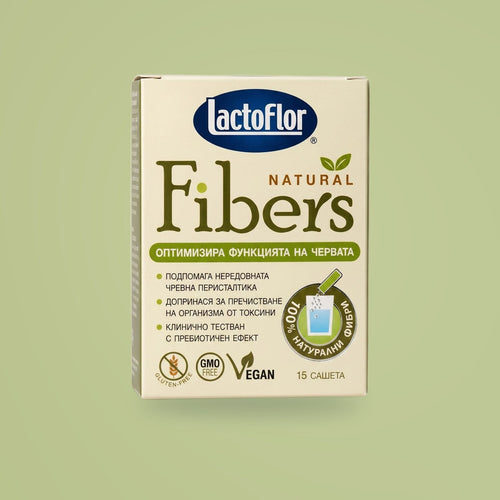
A pure prebiotic, without a single live bacterium: 100% natural fiber, inulin from chicory root, in 15 sachets. Dissolve in water or juice and take during a meal. The fiber complex creates a feeling of satiety and beneficially affects intestinal peristalsis. See Fibers.
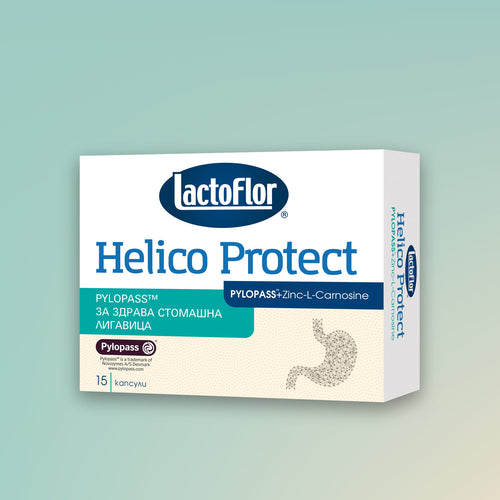
Lactoflor HelicoProtect
A dietary supplement with the patented Pylopass, which is a selection of cells from the strain Lactobacillus reuteri DSM 17648. A 15-capsule package, one daily, for adults and children over 9 years of age. See HelicoProtect.
How to take them
- Opti6: for adults and children over 6 years, 1 to 2 capsules after a meal, with sufficient liquid. Course 2 to 4 weeks.
- Enteric Ecol: for adults and children over 6 years, 1 to 2 capsules daily with a little lukewarm water or juice. For children under 6 years, 1 capsule daily, with the contents poured out.
- Fibers: adults 1 sachet daily during a meal, children from 3 to 12 years half a sachet. Increase fiber intake gradually and drink plenty of water.
- HelicoProtect: for adults and children over 9 years, 1 capsule daily with sufficient water or juice.
- All probiotic capsules: at least two hours after taking other medications and never with hot drinks.
Frequently asked questions
What do the numbers on a probiotic label mean
Two numbers define the formula: the number of strains and the number of live bacteria, measured in CFU. More strains means broader coverage, more CFU means higher density. More important than both is a third number, which is almost never seen: until when the manufacturer guarantees this viability.
Can I take a probiotic and a prebiotic at the same time
Yes, that is exactly the principle of a synbiotic. If you are taking separate products, Fibers is dissolved during a meal, and probiotic capsules are taken after a meal. They do not need to be taken at the same time of day.
Why should a probiotic not be taken with hot drinks
Live bacteria are lyophilized, i.e., freeze-dried, and are activated upon contact with liquid. High temperatures reduce their viability before they reach the intestines. Lukewarm water or juice are the correct carrier.
Why the two-hour interval from other medications
The interval reduces the likelihood that substances taken simultaneously will affect the viability of the strains. This is a manufacturer's recommendation on the label, not a therapeutic instruction. If you are on a permanent therapy, coordinate the regimen with your treating physician.
What is Saccharomyces boulardii
A yeast, not a bacterium, which makes it different from the other ingredients in probiotic formulas. The strain has been studied in over 140 published studies. In the Lactoflor portfolio, it is present only in Enteric Ecol.
How long does a course last
It depends on the product. For Opti6, the duration of a course is described as 2 to 4 weeks. Lactoflor Probiotic, which is in another category, is intended for long-term daily intake. The practical rule: if the product is intended as a course, follow the course and take a break.
Related categories and readings
All products are dietary supplements. They do not replace a varied diet and a healthy lifestyle. Do not exceed the recommended daily dose. The information on this page is of a general nature and does not replace a consultation with a doctor or pharmacist.

 Digestion and peristalsis
 Gut health
 Gastrointestinal discomfort